
Table of Contents
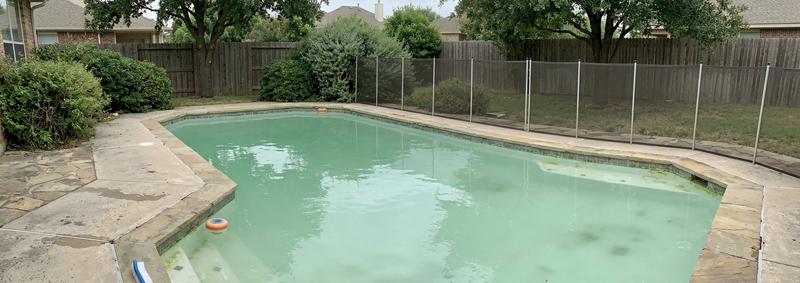
You wake up, look outside, and your pool looks like someone poured a gallon of milk into it. It isn't green, so you know it isn't an active algae bloom. You test your chlorine, and the levels are perfectly normal. So why is the water completely opaque?
Cloudy water is one of the most frustrating problems for a pool owner, but it is highly predictable. It almost always boils down to one of three culprits: mechanical failure, suspended environmental particles, or a chemical "snowstorm."
TL;DR: The 3 Reasons Your Pool is Cloudy
Mechanical
Dead algae trapped in a dirty or broken filter.
Environmental
Microscopic dust/oils need a clarifier to clump.
Chemical
High LSI forces calcium dust out of the water.
Culprit 1: Poor Filtration (The Dead Algae Trap)
Did you recently shock a green pool? When you successfully kill algae with high doses of chlorine, the algae turns gray or white. Those millions of dead microscopic plant cells remain suspended in the water.
Your filter is responsible for catching these dead cells. If your water stays cloudy days after a shock treatment, you likely have a mechanical issue:
- Not running the pump long enough: Clearing a cloudy pool requires the pump to run 24/7 until the water is clear.
- A dirty filter: Your filter media may be clogged. Backwash your sand/DE filter, or hose down your cartridges.
- Channeled Sand or Torn Grids: If dirt is blowing straight back through your return jets, the internal components of your filter are broken and require professional repair.
Caution: Filter Pressure
Never attempt to open or adjust the clamp band on a pool filter while the pump is running. The tank is under extreme pressure and can cause serious injury.
Culprit 2: Suspended Particles & Cosmetics
Sometimes, the particles making your water cloudy are simply too small for your filter to catch. Sunscreen, body oils, pollen, and microscopic dust can pass right through the sand or paper pleats of a standard filter.
The Fix: You need a Clarifier or a Flocculant. These chemicals act like magnets. They bind the microscopic particles together into larger clumps so your filter can finally trap them, or so they sink to the floor for you to vacuum out.
Clarifier vs. Flocculant
A Clarifier slowly clumps particles so your filter catches them (takes 24-48 hrs). A Flocculant rapidly binds everything into heavy chunks that sink to the bottom overnight — but you must then vacuum to waste. Floc is faster but uses more water.
Culprit 3: The Chemical "Snowstorm" (High LSI)
This is the most misunderstood cause of cloudy water. If your filtration is perfect and you have no dead algae, your pool chemistry is likely out of balance.
Water can only hold a certain amount of dissolved calcium. This capacity is measured by the Langelier Saturation Index (LSI). If your pH, Alkalinity, and Calcium Hardness spike too high, the water becomes "oversaturated." It physically cannot hold the calcium anymore, and forces it out of solution into a visible, milky white dust. We call this a calcium precipitation snowstorm.
The Quick Fix
If your LSI is above +0.3, lower your pH with Muriatic Acid. Once the LSI drops below +0.3, the calcium dissolves back into the water and the cloudiness clears almost instantly.
Interactive LSI Visualizer
Slide the chemistry values below. Watch what happens to the pool water when the pH or Calcium Hardness gets too high!
How to Clear the Cloudiness (Action Plan)
Step 1: Test and Balance Your Chemistry First
If your LSI is high (above +0.3), your filter will never clear the pool because the water is actively generating new calcium dust. Lower your pH using Muriatic Acid to bring the LSI back into balance. Once the LSI is below +0.3, the calcium will dissolve back into the water, clearing it up almost instantly.
Step 2: Deep Clean the Filter
If your chemistry is perfectly balanced but the water is still milky, your filter is the bottleneck. Turn off the pump and chemically soak your cartridge pleats, or perform a heavy backwash on your sand filter.
Step 3: Use a Flocculant (The Nuclear Option)
If you have a pool party tomorrow and need the water clear tonight, use a chemical Flocculant. It binds all suspended particles together into heavy clumps that sink to the bottom overnight. The next morning, you must manually vacuum the clumps to "Waste" (bypassing the filter entirely). Note: Do not run your filter on normal settings while Flocculant is in the water, or it will gum up the plumbing!
Shock Calculator
Killed the algae but water is still cloudy? Verify your shock level was high enough.
Calculate NowClarifier vs. Flocculant: Which One Do You Need?
Both products clear cloudy water, but they work in fundamentally different ways. Choosing the wrong one can waste time or even make the problem worse.
| Clarifier | Flocculant | |
|---|---|---|
| How it works | Polymer molecules bind tiny particles into larger clumps your filter can catch | Coagulates particles into heavy masses that sink to the pool floor |
| Time to clear | 24 – 48 hours | 8 – 12 hours (overnight) |
| Pump setting | Run pump 24/7 on "Filter" | Circulate briefly, then turn pump OFF overnight |
| After treatment | Clean/backwash filter when done | Vacuum settled clumps to WASTE (bypass filter) |
| Water loss | None (backwash only) | Significant — vacuuming to waste drains several inches |
| Works with cartridge filters? | Yes | Only if your multiport valve has a "Waste" setting (most cartridge filters do not) |
| Best for | Mild cloudiness, maintenance doses, cartridge filter owners | Severe cloudiness, pool party in the morning, sand/DE filter owners |
Common mistake: Do not use clarifier and flocculant at the same time
They work against each other. Clarifier tries to keep particles suspended for the filter; flocculant tries to sink them. Using both creates a gel-like mess that can clog plumbing. Pick one method and commit to it.
Clearing Timeline: What to Expect Hour by Hour
Knowing the typical timeline helps set expectations and tells you if something else is wrong.
Balance chemistry first
Test pH, alkalinity, calcium hardness, and CYA. Lower pH to 7.2-7.4 with muriatic acid if needed. If LSI is above +0.3, this step alone may clear the pool within hours.
Clean or backwash the filter
Remove and hose down cartridges, or backwash sand/DE filters until the sight glass runs clear. Set the pump to run 24/7. Check filter pressure — it should drop 5-10 PSI after cleaning.
Add clarifier (if needed)
If the water is not visibly improving after 6 hours with the pump running, add a dose of liquid clarifier. Continue running the pump. You should see a noticeable difference by morning.
Filter is doing the heavy lifting
The water should be noticeably less milky. You may need to backwash or clean the filter again during this window — the filter is loading up fast with captured debris. A second clean keeps it working efficiently.
Crystal clear
You should be able to see the main drain clearly. If the pool is still cloudy after 48 hours of continuous filtration with balanced chemistry, suspect a filter mechanical problem — check your filter internals.
Preventing Cloudy Water: The Weekly Checklist
Cloudy water is almost always preventable with a consistent weekly routine. Here is what keeps your pool crystal clear year-round:
Weekly clarity maintenance
Test water 2x per week — pH, free chlorine, and alkalinity at minimum. Use the Taylor K-2006 drop test for accuracy.
Keep pH between 7.2 and 7.6 — this is the single most impactful number for clarity. High pH drives LSI up and makes chlorine less effective.
Run the pump 8-12 hours daily — water needs to turn over at least once per day. Stagnant water is cloudy water.
Clean your filter on schedule — cartridge filters every 2-4 weeks, sand filters backwashed when pressure rises 8-10 PSI above clean baseline.
Brush walls and floor weekly — brushing knocks biofilm and calcium scale off surfaces before they become suspended particles.
Add a maintenance dose of clarifier after heavy swim days — a small weekly dose of clarifier after pool parties prevents the buildup of sunscreen and body oils that cause haze.
Frequently Asked Questions
Why is my pool cloudy even though the chlorine is fine?
Chlorine level is only one piece of the puzzle. Cloudiness is usually caused by dead algae trapped in a dirty filter, microscopic particles too small for your filter to catch, or a high LSI causing calcium to precipitate. Check your filter pressure and test your pH, Alkalinity, and Calcium Hardness to calculate your LSI.
How long does it take for a cloudy pool to clear?
It depends on the cause. If it's a high LSI (chemical snowstorm), lowering the pH can clear the pool in hours. If it's dead algae after a shock treatment, it typically takes 24-72 hours with the pump running 24/7 and clean filter media. Using a Flocculant can clear it overnight if you vacuum to waste the next morning.
Is it safe to swim in a cloudy pool?
No. If you cannot clearly see the main drain at the bottom of the deep end, the pool is a critical drowning hazard because a submerged swimmer would be invisible. Additionally, cloudiness can indicate a sanitizer deficiency, which means harmful bacteria may be present. Do not swim until the water is crystal clear.
Can I use baking soda to clear a cloudy pool?
No — baking soda (sodium bicarbonate) raises alkalinity and pH, which pushes your LSI higher. If the cloudiness is caused by a high LSI, adding baking soda will make it worse. Only add baking soda if a proper water test confirms your alkalinity is below 80 ppm.
My pool turned cloudy after adding shock — is that normal?
Yes, this is very common and actually a good sign. It means the chlorine killed the algae, and the dead cells are now suspended in the water. Your filter needs to catch them. Run the pump 24/7, clean the filter after 12-24 hours, and it should clear within 48 hours. If it does not, see the green pool guide for next steps.
Why does my pool get cloudy after rain?
Rainwater introduces contaminants (pollen, dust, dissolved minerals) and dilutes your chlorine and stabilizer levels. Heavy rain can also lower pH and alkalinity, disrupting your water balance. After any significant rain, test your water and shock the pool to restore sanitizer levels. Running the pump for an extra cycle usually clears it within 24 hours.
Can a pool leak cause cloudy water?
Indirectly, yes. A pool leak constantly drains treated water and replaces it with unbalanced fill water. This dilutes your chlorine, CYA, and other chemicals, creating conditions for algae growth and particle accumulation. If your pool keeps going cloudy despite proper treatment, check for a leak.
Filter Still Shooting Dirt Back?
You May Have a Broken Filter Lateral.
If you have balanced the water and run the pump for days with no improvement, the internal components of your filter might be torn or broken. Connect with a local pro to inspect your equipment pad.
Related: Ultimate Pool Filter Guide · How to Test Pool Water